
tanai
CV ↓
i am the .AI

the lab (where i cook)

this is where i write down what i'm building with AI. some of it runs every day. some of it is a sketch i'm still beefing with. each card says which.

  • LIVE
  • PILOT
  • DESIGNED
  • CONCEPT
  • BUILDING
Simulator →

the simulator is right below. go on, try to break it. i'll wait.

Try it · Live

order flow simulator (go wild)

set up an order, pick a delivery type and payment terms, and watch where it goes, when it ships and when the invoice goes out. it runs on BrandHub (opens in a new tab)'s order rules. try to break it, i dare you.

open the simulator →

Ask BrandHub

BUILDING

Before

monthly reports that take longer to read than to make. the irony.

How

a local Llama model on BrandHub (opens in a new tab)'s own server. it doesn't get the whole database (boundaries). it gets tools to query PostgreSQL and knows which tables hold what, so it answers in plain words.

my part

i'm building it: the tools it can use, which tables it may read, and the checks on its answers.

  1. question
  2. Llama picks a query
  3. PostgreSQL
  4. data back
  5. plain answer

"Which tenants ordered napkins last month?"

→ finds the product first

→ then the tenants, then their orders. detective mode.
Claude skills and agents

LIVE

Before

about 20 hours to get a sprint ready, and the same chores every week, on loop.

How

Claude skills and a chain of agents i built for the slow parts of my own job: competitor research, git and data-model impact, cleaning up client documents, drafting Jira stories. Atlassian Rovo checks each story for gaps. if your week has a part like this, or a portal flow that could be simpler, that's my kind of problem. hmu.

sprint prep went from about 20 hours to about 6. W.

my part

i built them, and i use them every sprint. eating my own cooking.

  1. client doc
  2. research agent
  3. impact agent
  4. story drafts
  5. Rovo check
  6. Jira

SPRINT PREP ......... 20 H → ABOUT 6 H

Sales call to quote

DESIGNED

Before

today a salesperson spends 10 to 15 minutes on a call, writes notes, searches the catalog and builds the order by hand. in this economy?

How

built for BrandHub (opens in a new tab): the AI captures the order call and drafts the order lines. a note-taker that never zones out. calls are in English or Dutch. it takes admin off salespeople. it doesn't replace them. we stan salespeople.

my part

i designed the flow and wrote the spec for BrandHub (opens in a new tab).

  1. call
  2. live transcript
  3. model pulls out products and quantities
  4. catalog match
  5. draft order
  6. salesperson checks
  7. quote

"I need 500 napkins."

→ product: napkin, quantity: 500

→ 50 matching napkins, sorted for the salesperson to pick.

TARGET ........... 5 TO 6 MIN

Shop assistant

CONCEPT

Before

a new customer doesn't know a catalog of thousands of products.

How

the assistant asks what business they run, where, what for and how many, then suggests products. personal shopper energy.

my part

my concept. on paper for now.

  1. what business?
  2. where?
  3. what for?
  4. how many?
  5. catalog search
  6. suggested basket

someone opening a restaurant gets aprons, napkins, uniforms and table items in one list. the starter pack, basically.

Supplier over-delivery radar

CONCEPT

Before

printing machines often make a few extra. order 1,000, receive 1,050, and the supplier bills for 1,050. sneaky.

How

once is fine. the warehouse scans every box, so the system can spot a pattern: +7%, +8%, +6% from the same supplier on the same item. that's not a coincidence, that's a lifestyle. then it tells product management, who can change the default quantity, the tolerance, or the vibe of the conversation with the supplier.

my part

my concept. on paper for now.

  1. box scanned
  2. matched to order line
  3. difference logged
  4. pattern spotted
  5. alert

SUPPLIER X · ARTICLE Y

ORDER 1 ............. +7%

ORDER 2 ............. +8%

ORDER 3 ............. +6%

→ "Over-delivered 3 times. Look?"

Ask Metis

LIVE

Before

about 30 reports a day, and most of them were questions, not bugs. surprise.

How

The incident assistant from File 03. An LLM checks each report against the system's data models and the code in git, then sorts it: a question it can answer, a real bug, or an idea for the backlog.

my part

i specified it, wrote the prompt and output rules, and led the launch.

  1. report
  2. data models + git
  3. question / bug / idea
  4. answer or Jira

Invoicing platform

BUILDING

Before

Teams juggle invoicing tools like Teamleader and Moneybird next to their real system.

How

One platform for manual and system-generated invoices, end to end.

my part

i set its OKRs and prioritise its backlog. one of my four products.

  1. order or manual
  2. draft
  3. review
  4. booked

IN BUILD · 2026

Ask BrandHubBUILDING

Before

monthly reports that take longer to read than to make. the irony.

How

a local Llama model on BrandHub (opens in a new tab)'s own server. it doesn't get the whole database (boundaries). it gets tools to query PostgreSQL and knows which tables hold what, so it answers in plain words.

my part

i'm building it: the tools it can use, which tables it may read, and the checks on its answers.

  1. question
  2. Llama picks a query
  3. PostgreSQL
  4. data back
  5. plain answer

"Which tenants ordered napkins last month?"

→ finds the product first

→ then the tenants, then their orders. detective mode.

Claude skills and agentsLIVE

Before

about 20 hours to get a sprint ready, and the same chores every week, on loop.

How

Claude skills and a chain of agents i built for the slow parts of my own job: competitor research, git and data-model impact, cleaning up client documents, drafting Jira stories. Atlassian Rovo checks each story for gaps. if your week has a part like this, or a portal flow that could be simpler, that's my kind of problem. hmu.

sprint prep went from about 20 hours to about 6. W.

my part

i built them, and i use them every sprint. eating my own cooking.

  1. client doc
  2. research agent
  3. impact agent
  4. story drafts
  5. Rovo check
  6. Jira

SPRINT PREP ......... 20 H → ABOUT 6 H

Sales call to quoteDESIGNED

Before

today a salesperson spends 10 to 15 minutes on a call, writes notes, searches the catalog and builds the order by hand. in this economy?

How

built for BrandHub (opens in a new tab): the AI captures the order call and drafts the order lines. a note-taker that never zones out. calls are in English or Dutch. it takes admin off salespeople. it doesn't replace them. we stan salespeople.

my part

i designed the flow and wrote the spec for BrandHub (opens in a new tab).

  1. call
  2. live transcript
  3. model pulls out products and quantities
  4. catalog match
  5. draft order
  6. salesperson checks
  7. quote

"I need 500 napkins."

→ product: napkin, quantity: 500

→ 50 matching napkins, sorted for the salesperson to pick.

TARGET ........... 5 TO 6 MIN

Shop assistantCONCEPT

Before

a new customer doesn't know a catalog of thousands of products.

How

the assistant asks what business they run, where, what for and how many, then suggests products. personal shopper energy.

my part

my concept. on paper for now.

  1. what business?
  2. where?
  3. what for?
  4. how many?
  5. catalog search
  6. suggested basket

someone opening a restaurant gets aprons, napkins, uniforms and table items in one list. the starter pack, basically.

Supplier over-delivery radarCONCEPT

Before

printing machines often make a few extra. order 1,000, receive 1,050, and the supplier bills for 1,050. sneaky.

How

once is fine. the warehouse scans every box, so the system can spot a pattern: +7%, +8%, +6% from the same supplier on the same item. that's not a coincidence, that's a lifestyle. then it tells product management, who can change the default quantity, the tolerance, or the vibe of the conversation with the supplier.

my part

my concept. on paper for now.

  1. box scanned
  2. matched to order line
  3. difference logged
  4. pattern spotted
  5. alert

SUPPLIER X · ARTICLE Y

ORDER 1 ............. +7%

ORDER 2 ............. +8%

ORDER 3 ............. +6%

→ "Over-delivered 3 times. Look?"

Ask MetisLIVE

Before

about 30 reports a day, and most of them were questions, not bugs. surprise.

How

The incident assistant from File 03. An LLM checks each report against the system's data models and the code in git, then sorts it: a question it can answer, a real bug, or an idea for the backlog.

my part

i specified it, wrote the prompt and output rules, and led the launch.

  1. report
  2. data models + git
  3. question / bug / idea
  4. answer or Jira
Invoicing platformBUILDING

Before

Teams juggle invoicing tools like Teamleader and Moneybird next to their real system.

How

One platform for manual and system-generated invoices, end to end.

my part

i set its OKRs and prioritise its backlog. one of my four products.

  1. order or manual
  2. draft
  3. review
  4. booked

IN BUILD · 2026

PeirceBUILDING

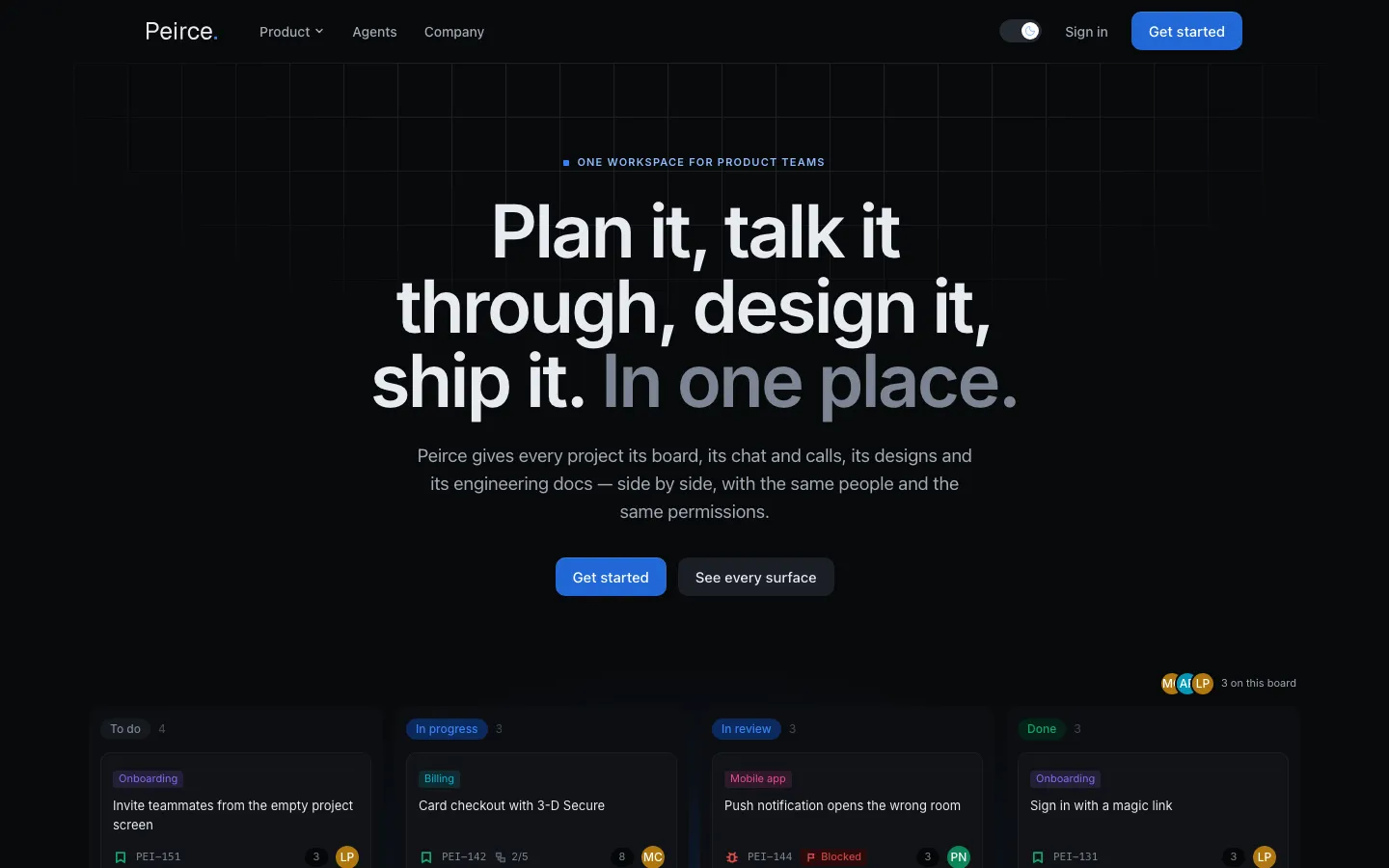
requirements, designs, data models, boards, docs and chat in one place. no more tab-hopping between Jira, Figma, Confluence and Teams. something changes, AI finds what it touches and helps fix it.

my part

my idea. i'm designing it and building it. solo era.

named after the father of pragmatism. that's the vibe we follow.

peirce.app →

Peirce BUILDING

requirements, designs, data models, boards, docs and chat in one place. no more tab-hopping between Jira, Figma, Confluence and Teams. something changes, AI finds what it touches and helps fix it.

my part

my idea. i'm designing it and building it. solo era.

named after the father of pragmatism. that's the vibe we follow.

peirce.app →
Peirce workspace showing a board next to chat and docs
Ask tan.ai